Property Development Finance in Auckland Explained
Key Takeaways
Property development finance in Auckland is structured around the land, the build, the projected end value and the borrower’s ability to manage risk. The right facility is less about securing the largest possible loan and more about matching funding to the project’s timing and exit.
- Development finance usually funds land, construction or both, with money released in stages.
- Lenders assess the borrower, site, feasibility, costs, end value and repayment strategy together.
- Auckland zoning, infrastructure, access and construction conditions can materially change feasibility.
- Interest, GST, professional fees, contingencies and delays should be included from the beginning.
- A clear exit plan and realistic assumptions are central to a financeable proposal.
What property development finance covers in Auckland
Property development finance is designed for projects where the property will be changed, built on, subdivided or repositioned before the lender is repaid. It may cover land acquisition, pre-development work, construction costs or a combination of these stages. Unlike an ordinary mortgage, the facility is assessed against a project as well as the borrower. That makes the feasibility, timing and exit just as relevant as the security itself.
For Auckland investors, the detail matters because two apparently similar sites can have very different servicing, consenting and construction requirements. A lender will want to understand not only what the finished property may be worth, but how the project will get there. The following distinctions provide a useful starting point.
How development finance differs from a standard home loan
A standard home loan generally supports the purchase or refinancing of an existing residential property, with repayments based largely on the borrower’s income and the property’s value. Development lending is more dynamic. Funds may be advanced progressively as work is completed, and the lender may reassess costs, valuation and progress during the build.
The term is often shorter and the interest structure can be different from a typical owner-occupier loan. The borrower may need to demonstrate experience, contribute equity and provide detailed plans, budgets and contracts. The project itself must remain viable even if construction takes longer or the eventual sale price is lower than first estimated.
Which projects lenders commonly finance
Lenders may consider a broad range of projects, from a single new dwelling to a multi-unit development or land subdivision. The scale, complexity and proposed use of the finished property will affect the evidence required and the funding structure available.
Common examples include:
- Acquiring a site for subdivision or a planned residential build.
- Constructing houses, terraces, townhouses or small apartment projects.
- Completing substantial renovations where the existing property will be repositioned for sale or retention.
- Funding commercial, mixed-use or industrial development where the security and income profile are suitable.
The project does not need to be large to require development finance. A small Auckland subdivision can involve just as much planning, infrastructure and timing risk as a larger project, particularly where access or services are constrained. A property development finance guide can help frame the differences between bank, private and equity funding before a proposal is prepared.
The role of land, construction and end-value assessments
A lender normally considers three connected values: the current or as-is value of the land, the total cost to complete the project and the expected value once finished. These figures are not interchangeable. A strong end value cannot compensate for an understated build budget, and a low land price does not necessarily make a difficult site financeable.
Independent valuations, quantity surveying, planning advice and builder documentation may all contribute to the assessment. The lender is testing whether the proposed debt remains adequately supported at each stage, not simply whether the finished development looks attractive. Timing also matters, because interest continues while approvals, construction or sales are delayed.
Why Auckland’s market conditions affect borrowing
Auckland’s size creates a wide spread of project conditions. Demand, achievable sale prices, land values and construction costs can vary considerably between suburbs, while planning overlays and infrastructure capacity can make one site more complex than another. A lender therefore considers the specific address and product, rather than relying on a broad Auckland average.
Market conditions also affect the exit. If the plan relies on selling completed dwellings, the lender may examine comparable sales, absorption assumptions and the likely buyer pool. If the plan is to retain the property, rental demand, operating costs and refinancing capacity become more significant. A sensible proposal explains how the project works in the actual location.
Main types of property development finance
There is no single facility called development finance that suits every Auckland project. Funding may be arranged for the purchase of land, the construction phase, a short settlement window or a gap between senior debt and the total capital required. The structure should reflect when money is needed and how it will be repaid.
Cost, speed, security ranking and flexibility all influence the choice. A cheaper facility may involve more conditions or a longer approval process, while a flexible facility may carry a higher interest rate. The practical question is whether the funding remains available through the project’s difficult points, not just whether the initial term sheet looks attractive.
Land acquisition and pre-development funding
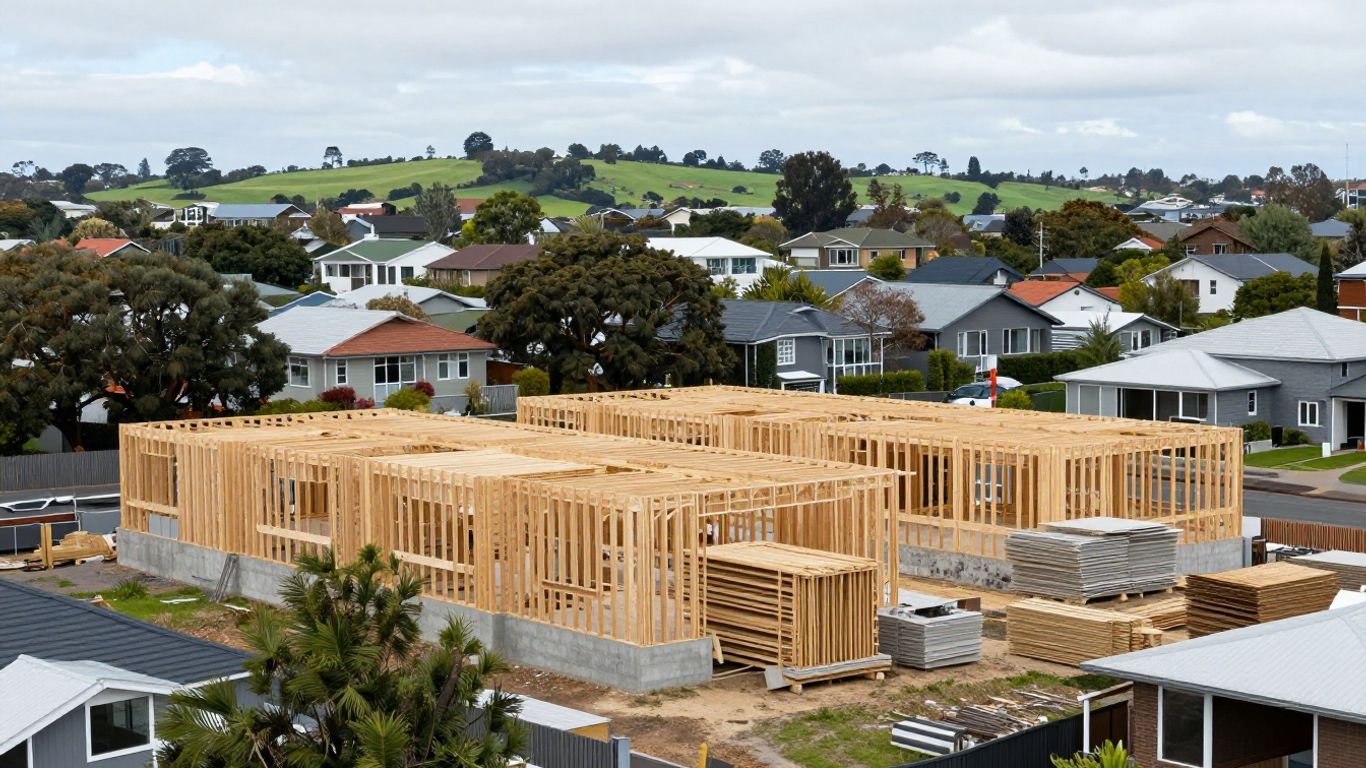
Land acquisition funding can help a borrower settle on a site before construction begins. It may be combined with capital for surveys, design, planning, geotechnical work and other pre-development expenses, although the lender will want clarity on the next funding stage. Some borrowers use equity for early work and seek debt once the project has more defined costs and approvals.
The timing of due diligence is critical. A site that appears inexpensive may require retaining, drainage upgrades, access work or service extensions. Those costs can affect both the land facility and the later construction loan. Land funding should therefore be assessed alongside the intended development rather than treated as an isolated purchase loan.
Construction and progress-payment loans
Construction loans are typically advanced in stages against progress. The lender may require a fixed-price building contract, a registered builder, inspections, certificates or reports before each drawdown. This protects both parties by linking the release of funds to measurable work on site.
The borrower needs enough liquidity to manage invoices, variations and timing differences between payments. A delayed inspection or incomplete document can hold up a drawdown even when work is continuing. Clear communication with the lender, builder and project manager is part of the funding process, not an administrative detail to address later.
Bridging finance for time-sensitive purchases
Bridging finance is intended for a short period where settlement must occur before longer-term funding or a sale is completed. It can be useful when a purchase opportunity has a compressed timetable, but it is not a substitute for a complete development feasibility.
The lender will focus closely on the repayment event. That might be settlement of permanent debt, sale of another property, or a refinance once consents and construction milestones are reached. Because the term is short, any delay can have a disproportionate effect on interest and availability. The bridge should have a credible path out before it is drawn.
Mezzanine finance and second-tier lending
Mezzanine finance sits behind senior debt and can fill part of the capital gap where the borrower’s equity is insufficient. It may allow a project to proceed without replacing the senior facility, but the additional cost and repayment priority need careful modelling. Second-tier lending can also involve different enforcement rights and documentation.
This structure is most useful when the underlying project is strong and the gap is clearly defined. It becomes risky when it is being used to cover a fundamentally weak margin or an incomplete budget. Investors considering private capital should understand the ranking, security, interest treatment and exit assumptions in detail; a guide to private property deals provides useful context on common deal structures and priority.
How lenders assess a development application
A development application is assessed as a connected story rather than a collection of documents. The borrower must show that they can execute the project, that the numbers are supportable and that the proposed debt can be repaid. A polished presentation cannot repair a weak feasibility, but a clear and complete application can make the lender’s review more efficient.
Different lenders place different weight on experience, presales, valuation evidence and the level of conditions attached to funding. The fundamentals remain similar: understand the security, test the assumptions and identify what happens if the original plan changes.
Borrower experience and financial strength
Lenders usually review the borrower’s track record, financial position and role in the project. Relevant experience may include completed developments, construction management, subdivision work or a demonstrated ability to coordinate professional advisers. A first-time developer may still be considered, but could need stronger equity, experienced partners or additional oversight.
The application should disclose existing debt, contingent liabilities, available cash and other commitments. Personal guarantees and supporting security may also be requested. Transparency is preferable to presenting an overly optimistic picture that later changes during diligence.
Site value, project costs and loan-to-cost ratios
Loan-to-cost ratios compare the proposed debt with the total cost of the project, while loan-to-value measures focus on the value of the security. Both can matter, and neither should be viewed without the other. A project with a high projected margin may still be difficult to fund if the cost base is uncertain or the debt is too large relative to current value.
Costs should include acquisition, consultants, construction, finance, marketing, taxes and contingencies. If a borrower leaves out early-stage expenses or assumes that variations will be absorbed by the builder, the ratio may look stronger than it really is. Lenders generally prefer a budget that is comprehensive and conservative.
Feasibility studies, valuations and projected end values
A feasibility study brings the project assumptions into one model. It should show the site cost, timeline, development scope, individual cost categories, funding assumptions, expected revenue and sensitivity to change. An independent valuation then provides an external view of the land and proposed finished value.
The quality of the evidence matters. Comparable sales should be relevant to the product and location, while cost estimates should reflect current conditions and the actual specification. A lender may also test what happens if the build takes longer, sale prices soften or an unexpected site issue adds cost.
Presales, rental income and the proposed exit strategy
Presales can provide evidence of demand and may support a construction funding application, although their importance varies by lender and project. The terms matter as much as the headline price: deposits, finance clauses, settlement dates and purchaser quality can all affect how useful a presale is.
A hold strategy is assessed differently. The borrower may need to show realistic rental income, operating expenses and the ability to refinance once the property is complete. Whether the proposed exit is sale, refinance, long-term rental or a combination, it should be specific enough for the lender to understand the repayment path.
Costs to include in an Auckland development budget
A development budget should describe the full cash requirement from acquisition through to completion and exit. It is easy to focus on the builder’s contract and overlook the expenses that sit around it. Those overlooked items can consume equity, delay progress or require an unplanned funding increase.
Auckland projects also need room for site-specific surprises. A sloping site, constrained access or service upgrade can alter both the programme and the cost plan. The budget is therefore a decision-making tool, not just an attachment for the lender.

Site purchase costs and due diligence
The purchase price is only the first site-related cost. The budget may need to include legal fees, valuation, survey, geotechnical investigation, planning advice, searches and due diligence reports. Depending on the transaction, there may also be holding costs between acquisition and the start of construction.
Early diligence should test whether the intended development is actually achievable. Checking title, access, services, hazards, easements and planning controls before committing to the purchase can prevent a cheap-looking site from becoming an expensive problem. The result should feed directly into the feasibility and funding request.
Construction, consultant and professional fees
Construction costs normally form the largest part of the budget, but they are not the only delivery expense. Architects, engineers, planners, surveyors, project managers, quantity surveyors, solicitors and marketing advisers may all have roles. Their fees should be timed against the project programme rather than added as a single rough percentage.
The building contract should be read alongside exclusions, provisional sums, escalation provisions and variation procedures. A lower initial tender is not necessarily cheaper if important work is excluded. The lender will want to see that the specification, contract and contingency reflect the actual project.
Council contributions, consent and infrastructure costs
Resource consent, building consent, development contributions and inspection charges can materially affect an Auckland feasibility. Some projects also require upgrades to drainage, water, power, vehicle crossings, retaining or other infrastructure. The timing of these payments matters because they may fall due before sale proceeds are available.
Planning advice should clarify which approvals are required and what conditions may attach to them. If the project depends on subdivision approval or a particular servicing solution, that dependency should be visible in the programme. Treating consent as a formality is a common way to understate both risk and duration.
Interest, lender fees, contingencies and GST
Interest should be modelled across the full expected term, including acquisition, approvals, construction, marketing and settlement. Lender establishment fees, valuation costs, legal fees, inspection charges and extension fees may also apply. GST treatment should be confirmed with the project’s accountant, particularly where the borrower is registered or the development has mixed uses.
A useful budget separates known costs from allowances and then stress-tests both. For a quick review, the main categories can be arranged as follows:
| Budget category | Typical question | Why it matters |
|---|---|---|
| Acquisition and diligence | What must be paid before settlement? | Determines initial equity and settlement funding. |
| Design, consent and professional work | Which advisers and approvals are required? | Shapes timing and pre-construction cash flow. |
| Construction and infrastructure | What is included, excluded or provisional? | Identifies delivery risk and drawdown needs. |
| Finance and holding costs | How long could the debt remain outstanding? | Shows the effect of delay on the margin. |
| Contingency and tax | What assumptions need independent confirmation? | Reduces the chance of a mid-project funding gap. |
Reading the budget this way helps the borrower connect each cost to a payment date and funding source. It also gives the lender a clearer basis for testing the proposal, rather than forcing them to infer missing items from a headline total.
The application process from concept to settlement
The funding process normally begins before a formal application. A lender needs enough information to understand the site, the intended outcome, the borrower’s contribution and the proposed repayment. Preparing that information early can expose an unworkable assumption while there is still time to change the project.
Once funding is approved, the work becomes more operational. Conditions must be satisfied, documents executed and drawdowns coordinated with the programme. A good process keeps the feasibility, budget and actual site position aligned.
Preparing a lender-ready development proposal
A lender-ready proposal should explain the project in plain terms: what is being acquired, what will be built, how much it will cost, how long it will take and how the debt will be repaid. It should include plans, budgets, a development programme, ownership structure, borrower information and supporting evidence for key assumptions.
The proposal should also state what has not yet been confirmed. Acknowledging an outstanding consent, quote or valuation is more useful than presenting an incomplete item as settled. The capital-raising checklist can help an operator organise information on the deal, security, financials and exit before approaching private capital.
Obtaining plans, consents and independent valuations
Plans and consent documents help the lender understand the scope and risk of the work. Independent valuations provide a separate view of the site and completed product, while a quantity surveyor or suitably qualified professional may review costs and progress. The precise requirements depend on the lender and facility.
These documents should be consistent. If the plans show more dwellings than the feasibility, or the valuation assumes a specification that the budget does not fund, the inconsistency will need to be resolved. A short delay in obtaining reliable evidence is usually preferable to building a funding request around uncertain information.
Comparing bank, non-bank and private finance options
Funding sources differ in pricing, speed, leverage, documentation and appetite for project complexity. A bank may suit a well-established borrower with a straightforward project and time to satisfy detailed conditions. Non-bank or private funding may be considered where timing, structure or the project profile requires a different approach, but the borrower must still assess total cost and security terms.
Private capital is often arranged through direct discussions between principals, with the proposed priority, return, term and exit set out clearly. FundHaus provides a platform where members can both fund deals and raise capital through direct, principal-to-principal connections. Its model also allows members to browse opportunities anonymously until they choose to connect, which can be relevant when privacy matters during early assessment.
Managing drawdowns during construction
Drawdowns should follow an agreed process linked to construction milestones. The borrower may need to submit invoices, progress reports, inspection evidence or updated cost information before funds are released. Keeping these records current avoids unnecessary friction and gives all parties an accurate view of remaining work.
Variations should be raised early, especially where they affect the completion date or contingency. If the project is likely to exceed its approved budget, the borrower should discuss the position before the available facility is exhausted. A lender is better placed to consider options when there is still time to respond.
Auckland-specific factors that can affect finance
Auckland development finance is shaped by the physical and regulatory conditions of the site as much as by broad market sentiment. A project’s address can influence planning rules, infrastructure requirements, construction logistics, buyer demand and the likely exit value. These factors are interconnected, so a change in one may affect the whole feasibility.
Borrowers should investigate them at the beginning rather than relying on a generic allowance. Lenders are likely to ask the same practical questions, particularly where the project depends on an approval, service connection or narrow sales assumption.
Zoning, subdivision and resource consent requirements
The proposed use, density, height, setbacks, access and subdivision arrangement may all be governed by planning rules and consent conditions. A project that appears to fit on paper may need specialist advice before the developer can confirm its yield. The consent pathway can also affect the timing of land settlement, construction commencement and funding drawdown.
The feasibility should state whether the development is permitted, consented, lodged or still conceptual. Each stage carries a different degree of certainty. If the value depends on a higher yield than the current approval supports, that risk needs to be reflected in the funding structure and contingency.
Site access, services and infrastructure constraints
Narrow sites, shared driveways, steep grades and limited storage can complicate construction logistics. Existing water, wastewater, stormwater, power and telecommunications may not be adequate for the completed development. Upgrades or new connections can add cost and extend the programme.
A site visit and early technical advice can reveal issues that a desktop review misses. The lender may want to see how materials, vehicles and trades will access the site, particularly in established neighbourhoods. These practical details can affect both the budget and the reliability of the construction schedule.
Construction pricing, labour availability and delays
Construction pricing can move between initial feasibility and contract signing. Labour availability, material lead times, weather, inspection timing and variations may each extend the programme. Since interest and holding costs continue during delay, the funding request should include a realistic duration rather than an optimistic target.
A fixed-price contract can provide useful certainty, but it does not remove every risk. Exclusions, design changes, provisional sums and client-supplied items still require attention. Regular cost-to-complete reviews help identify whether the project remains within its approved facility.
Location, demand and achievable sale prices across Auckland
Auckland is not one uniform residential market. The likely buyer, product type, land value and achievable price can differ between suburbs and even between nearby streets. Comparable sales should therefore be selected for genuine similarity in location, size, quality and timing.
The exit should allow for selling costs, marketing, settlement timing and the possibility that units take longer to sell. A development that works only at the top of an assumed price range is less resilient than one with room for a modest market adjustment. Lenders generally respond better to evidence and sensitivity testing than to confident but unsupported forecasts.
Managing risks and choosing the right funding structure
A suitable funding structure gives the project enough capital to reach its intended exit without creating unnecessary cost or complexity. It should account for the borrower’s equity, the senior debt, any subordinate funding and the timing of repayments. The cheapest-looking structure is not always the safest if it leaves no room for delay.
Risk management starts with the feasibility but continues through construction and sale. The borrower should know which assumptions matter most, what warning signs to monitor and what action is available if the original plan no longer holds.
Testing feasibility against cost and price changes
Sensitivity testing shows how the project responds when key assumptions move. Useful scenarios may include a higher build cost, a longer construction period, lower sale prices, slower settlements or a change in the number of approved dwellings. The purpose is not to predict every outcome, but to identify the point at which equity, debt service or repayment becomes strained.
The results should influence the structure. If a small price reduction eliminates the margin, the borrower may need more equity, a different product mix or a revised acquisition price. If cost escalation is the main vulnerability, a stronger contingency and more disciplined contract management may matter more than additional leverage.
Planning for interest-rate rises and construction delays
Interest should be modelled at more than one rate and across more than one completion date. A project that works only if the loan is repaid on the original target date may be exposed to even a short consent, construction or sales delay. Extension terms and their cost should be understood before the facility is signed.
The borrower can reduce exposure by maintaining current reporting, ordering long-lead items early where appropriate and resolving variations promptly. None of these steps removes risk, but they improve the chance of identifying a problem while practical choices remain available.
Protecting cash flow with suitable contingencies
Contingency is not spare profit. It is capital reserved for identifiable uncertainty, such as ground conditions, design changes, service upgrades, delays or professional advice. The appropriate amount depends on the project’s complexity and the quality of the information available.
Cash flow should be mapped month by month, including interest, fees, tax, consultant invoices and expected drawdowns. A simple schedule can show when the project is most exposed. If equity is needed to cover a gap, that source should be identified before construction starts rather than assumed into existence later.
Refinancing, selling or retaining the completed property
The exit strategy should be selected before the first drawdown, even if it may change. A sale requires a realistic assessment of demand, marketing time and settlement risk. A refinance requires sufficient completed value, sustainable income and a lender willing to take out the development facility. Retention may support long-term wealth creation, but it still needs a workable debt and cash-flow structure.
FundHaus is relevant to the capital-raising side of this decision because its platform connects property investors in New Zealand and Australia with opportunities to fund deals or raise capital. That does not replace project diligence or guarantee funding; it provides a direct setting for principals to assess a proposed transaction and decide whether to engage. The eventual structure should remain consistent with the project’s risk, security and repayment plan.
Conclusion
Property development finance in Auckland works best when the funding structure follows the real project: its site, approvals, costs, construction programme and exit. A complete feasibility, credible contingency and clear communication with the lender can make the difference between a facility that merely settles the land and one that carries the development through to completion. Before committing, test the numbers under pressure and make sure every source of capital understands its role and repayment priority.
Frequently Asked Questions
What is property development finance in Auckland?
It is funding arranged for a property project involving land acquisition, construction, subdivision, renovation or another material change before the lender is repaid. Facilities may cover one stage or the full development cycle.
How much deposit or equity is usually required?
The required contribution depends on the lender, site, project risk, total cost, end value and borrower strength. Equity may include cash, existing property security or other accepted forms of contribution, subject to the facility terms.
Can a first-time developer obtain development finance?
Possibly, although limited experience may mean the lender requires more equity, an experienced development partner, stronger documentation or additional project oversight. The feasibility and execution plan need to address the experience gap directly.
Do lenders always require presales?
No. Presale requirements vary by lender, project type, loan structure and risk assessment. Where presales are not required, the lender may place more weight on the borrower, security, feasibility, end value and exit strategy.
What costs are commonly missed in a development budget?
Common omissions include professional fees, consent and infrastructure costs, interest during delays, GST, marketing, legal expenses, valuation charges, variations and adequate contingency. A month-by-month cash-flow model helps expose these gaps.
How are construction loan funds released?
Construction facilities are commonly drawn in stages after agreed milestones or progress evidence are confirmed. The process may involve inspections, invoices, certificates, quantity surveying reports or updated cost information, depending on the lender and project.
What is the main risk in property development finance?
The central risk is that the project costs more, takes longer or produces less revenue than expected, leaving insufficient funds to complete or repay the debt. Conservative assumptions, suitable contingency and a credible exit reduce but do not eliminate that risk.